
Nicole Schraner, BA

Nicole Schraner, BA Student Assistant at the University of Lucerne Nicole Schraner began studying cultural studies with a major in history at the University of Lucerne in 2017. She received her Bachelor’s degree in 2020. She wrote her Bachelor’s thesis on the topic: «»Ziit isch da – Fraueschtimmrächt Ja» Eine Oral History-Arbeit zur Einführung des Frauenstimmrechts im Kanton Luzern (1959-1971)». She continued her Master’s studies in History and Religious Studies at the University of Lucerne, where she is expected to graduate in summer 2023 with her Master’s thesis: «Auf Spurensuche – Zur Geschichte der Identifizierung und Fahndung von Verdächtigen in Luzern von 1900 bis zum Ersten Weltkrieg».
Simona Baumgartner, BA

Simona Baungartner, BA Student Assistant at the University of Lucerne Simona Baumgartner completed her Bachelor of Arts in Cultural Studies with major History at the University of Lucerne in 2021. In her Bachelor’s thesis, she analysed the work situation of hotel employees in Lucerne in the second half of the 19th century using sources that have never or only been used cursorily up to now. Simona Baumgartner is studying history at the University of Lucerne in the Master’s program with a minor in religious studies and is working as an student assistant on two research projects, one at the Department of History and one at the Faculty of Theology, as well as in the public relations department of the Faculty of Culture and Social Sciences. Before working at the University of Lucerne, she worked, among other things, as a guide in the exhibition «Flucht» at the Historical Museum Lucerne and led tours for the Assiciation “Frauenstadtrundgang Luzern”.
Noemi Fuchs, BA

Noemi Fuchs, BA Student Assistant at the University of Lucerne Noemi Fuchs studies history as a major and science studies as a minor for her master’s degree at the University of Luzern. She finished her Bachelor’s degree in history as a major and biology as a minor in 2020 at the University of Zurich. For her bachelor’s thesis, she investigated the development of the regional hospital Schwyz from 1875 to 1910. While studying she worked, among other things, as a research assistant at the department «Research Collection» which is part of the Library of the Swiss Federal Institute of Technology in Zurich. She also worked at the Library of the University of Zurich. As a tutor for the history department at the University of Zurich, she created the website “zürich reloaded”.
Accessing Past Secrets
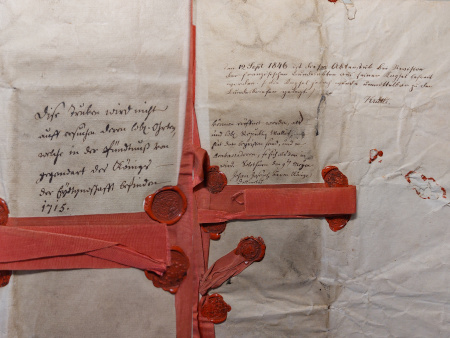
Accessing Past Secrets Archival Practices in the Swiss Republics Early modern archives were sites of public as well as secret information. This subproject investigates what measures early modern republics took to store and protect state secrets over time. How did the presence of such records affect the spatial organisation of the archives? Who was allowed to access the arcana imperii, and which political and social possibilities were attached to this privilege? These and other questions will be researched on the basis of both archival and printed records from selected Swiss city and rural cantons. The temporal focus will be on the seventeenth and eighteenth centuries, with special attention to the period from 1680 to 1720, when many public archives within the Confederacy were substantially reorganised in the context of growing political tensions and the emergence of new printed media. Conducted by Jan Haugner
Producing Public Secrets
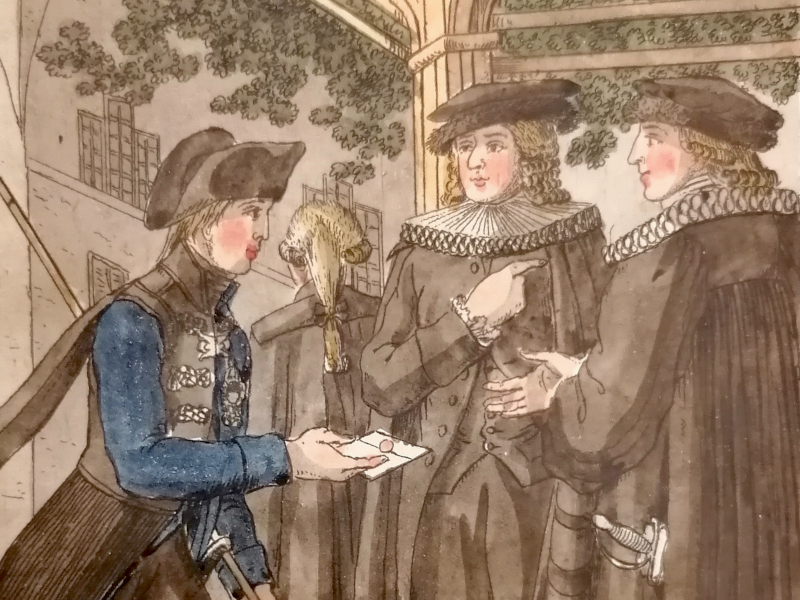
Producing Public Secrets Secret Councils in the Swiss Republic In late sixteenth- and seventeenth-century, numerous consultative bodies known as ‘secret councils’ emerged on the European political scene – not only in monarchies but also in republics. In collectively governed states, questions about the practicability and legitimacy of secrecy arose in a different way than in monarchies, since the secret councils were not only advisors to the sovereign, but were themselves part of the sovereign government. The PhD project within the framework of sub-project B aims to shed light on this topic systematically and in a comparative perspective. Using selected republics within the Swiss Confederacy as case studies, it will shed light on the different roles and functions of the secret councils by analysing the so-called secret manuals and correspondence, but also diaries and pictorial sources. Conducted by Debora Heim
Debating Secrecy
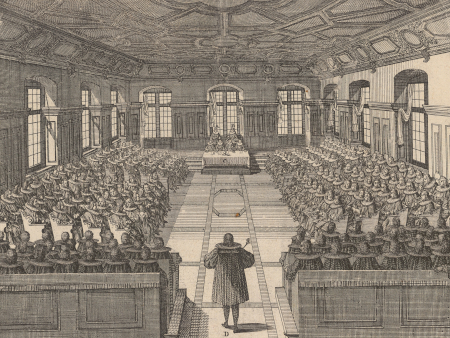
Debating Secrecy The Swiss Republic in the European Context Subproject A investigates how the tension between secrecy and collective government was discussed in early modern printed sources. Were the concepts of res publica and arcana imperii seen as opposites – or did republican sovereignty in the seventeenth century presuppose precisely the capacity for secrecy? For the reconstruction of these European intellectual discourses, the subproject will analyse in depth works of political theory as well as early modern state descriptions, travel literature, and works of historiography on selected republics. A selection of these sources will be made generally available via the project homepage. In a second step, the subproject will focus on the Swiss Confederacy, drawing on additional material including unpublished archival sources. The aim of this endeavour is to investigate the development of secrecy regimes in Switzerland in the longue durée. Conducted by Nadir Weber
Noah Businger, MA

Noah Businger, MA Associated researcher, PhD Candidate at the University of Bern Noah Businger, born in Stans in 1993, studied history and geography at the University of Bern (2017-2023), specialising in early modern Swiss history. His master’s thesis examines the city of Basel as a hub for war resources during the War of the Spanish Succession. During his studies, Noah worked as a student assistant and tutor at the Department of Swiss History at the University of Bern. He also writes regularly as a freelance journalist on historical topics for various media. Since October 2024, he has been a PhD student at the Department of Swiss History at the University of Bern under the supervision of Prof. Dr. Nadir Weber and an associate researcher of the Republican Secrets project. His dissertation project investigates the procurement and distribution of war resources in the neutral Swiss Republic of Basel in the seventeenth and eighteenth centuries. The study pays particular attention to the clandestine trade in war resources and the role of state actors in facilitating economic secrecy. His research interests include the political, social and economic history of the early modern Swiss Confederacy, wartime economic practices, early modern neutrality, and the business of war within the European fiscal-military system.
Leo Noa Mader, BA
Leo Noa Mader, BA Student Assistant at the University of Bern Leo Noa Mader studied History as his major subject and Economics as his minor at the University of Bern, completing his bachelor’s degree in summer 2025. His bachelor’s thesis, Between Resistance and Legitimation. The Historical Development of Government in the Perspective of Friedrich von Mülinen and Samuel Henzi in Comparison, examined eighteenth-century Bernese political thought. By comparing the writings of Mülinen and Henzi, the study analyzed contrasting interpretations of authority, legitimacy, and opposition within the context of the Old Swiss Confederacy. He is now pursuing a master’s degree in History with a specialization in Early Modern History and Older Swiss History, while also studying Digital Humanities as his minor subject. Leo Noa Mader is an assistant in the Department of Early Modern History and supports the project Republican Secrets. He also works as an assistant in Digital Humanities under the supervision of Christa Schneider and as a tutor in Older Swiss History at the University of Bern.
Amélie Jaggi, BA

Amélie Jaggi, BA Student Assistant at the University of Bern Amélie Jaggi studies history, political science, and constitutional law at the University of Bern. She is currently working on her bachelor’s thesis, in which she analyses the return migration from the Americas to Europe after the First World War using Swiss sources. Before joining the team, Amélie worked on Dr Agnes Gehbald’s postdoctoral project «Transatlantische Remigration nach Europa, 1870-1920». In addition to her work for the Republican Secrets project, Amélie Jaggi is currently working as a tutor at the University of Bern.
Charlotte Schmidli, BA

Charlotte Schmidli, BA Student Assistant at the University of Bern Charlotte Schmidli is currently studying in her Master‘s programme at the University of Berne, majoring in history and minoring in social sciences. She received her Bachelor‘s degree in August 2025. In her Bachelor‘s thesis, she researched counterrevolutionary and anti-Helvetic caricatures created by the artist and contemporary witness Balthasar Anton Dunker. Specifically, she analyzed the representation of animals in the artist‘s work. Charlotte Schmidli is an assistant in the Department of Early Modern History and supports the project „Republican Secrets“.