
Project History
Conference Report
The report on the conference “Silent Republics? Secrecy and Collective Rule in the Early Modern Period” is now available on H-Soz-Kult.
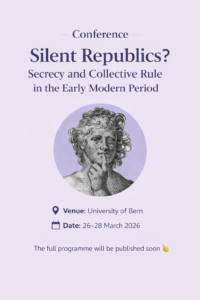
Held at the University of Bern (March 26–28, 2026) and organized by Nadir Weber, the conference brought together historians to examine how secrecy functioned within early modern republics — not simply as a failure of transparency, but as an active and often legitimate tool of political rule, diplomacy, and collective decision-making, from the Swiss Confederacy and the Dutch Republic to Venice and the early American Republic.
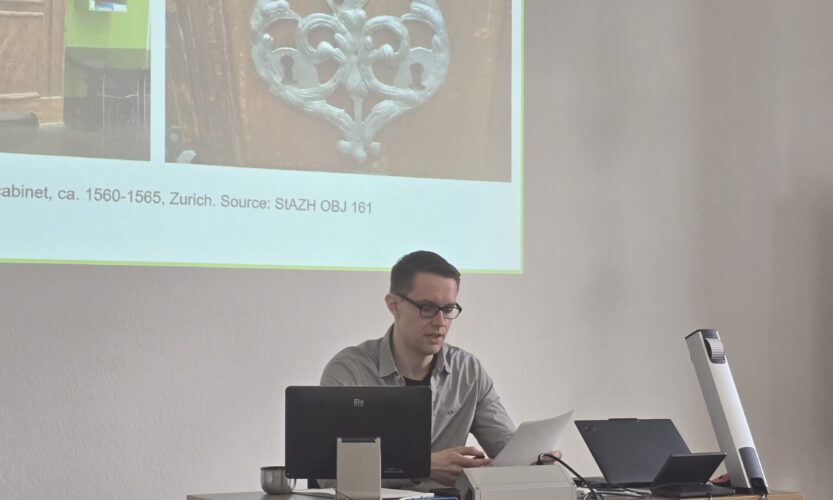
Conference Report: Silent Republics? Secrecy and Collective Rule in the Early Modern Period
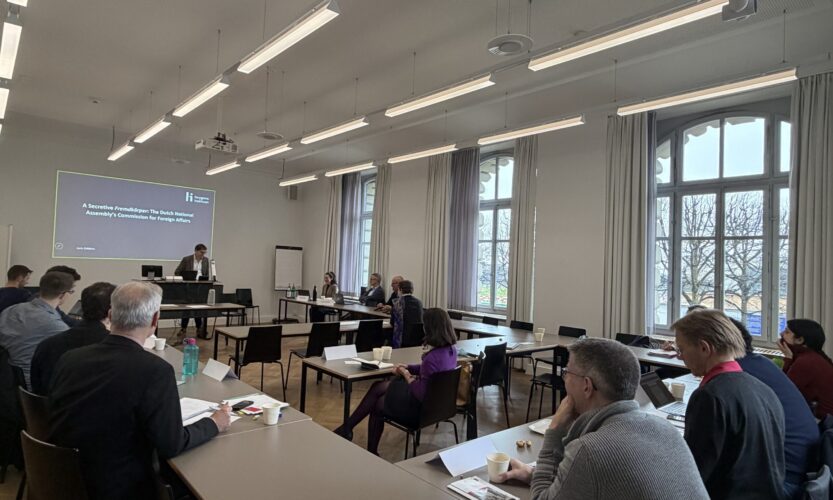
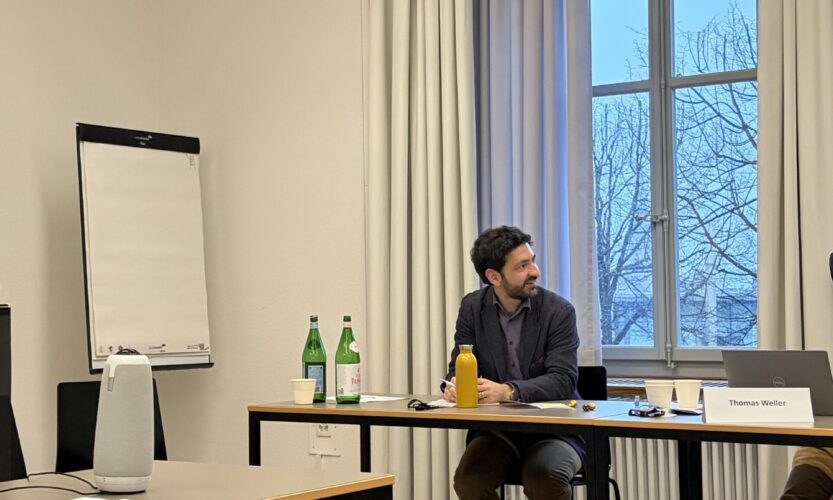
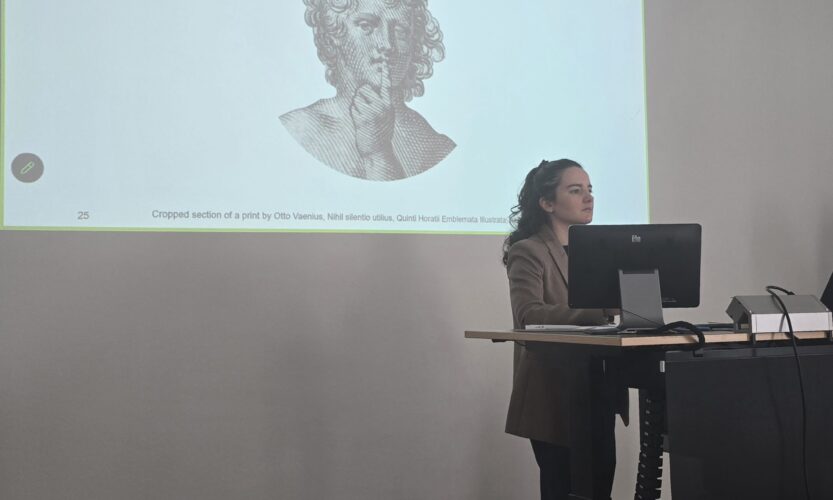
From 26 to 28 March 2026, the international conference “Silent Republics? Secrecy and Collective Rule in the Early Modern Period” took place at the University of Bern. Bringing together scholars from different countries, the conference explored practices of secrecy, silence, and collective rule in early modern republican polities. The programme approached secrecy as a political practice from a comparative perspective, ranging from Venice and Ragusa to the Swiss Confederacy, the Dutch Republic, and North America.
In her paper “Producing Public Secrets: Secret Councils in the Old Swiss Confederacy”, Debora Heim examined the role of secret councils in the Old Swiss Confederacy, highlighting how these institutions mediated between efficient decision-making, political exclusivity, and republican legitimacy.
In “Restricted Access as a Means of Secrecy in Early Modern Swiss Archives”, Jan Haugner addressed the relationship between archival organisation and secrecy, focusing on how restricted access functioned as a means of controlling state knowledge.
In his contribution “Keeping Trade Secret: Merchant Practices and Republican Management of Smuggling in Eighteenth-Century Basel”, Noah Businger explored how merchants and republican authorities in eighteenth-century Basel dealt with smuggling, information asymmetries, and economically sensitive knowledge.
The conference generated stimulating discussions on the significance of secrecy for republican forms of rule and opened up new perspectives on the relationship between knowledge, participation, and political power in the early modern period.
A full conference report is currently in preparation and will follow.
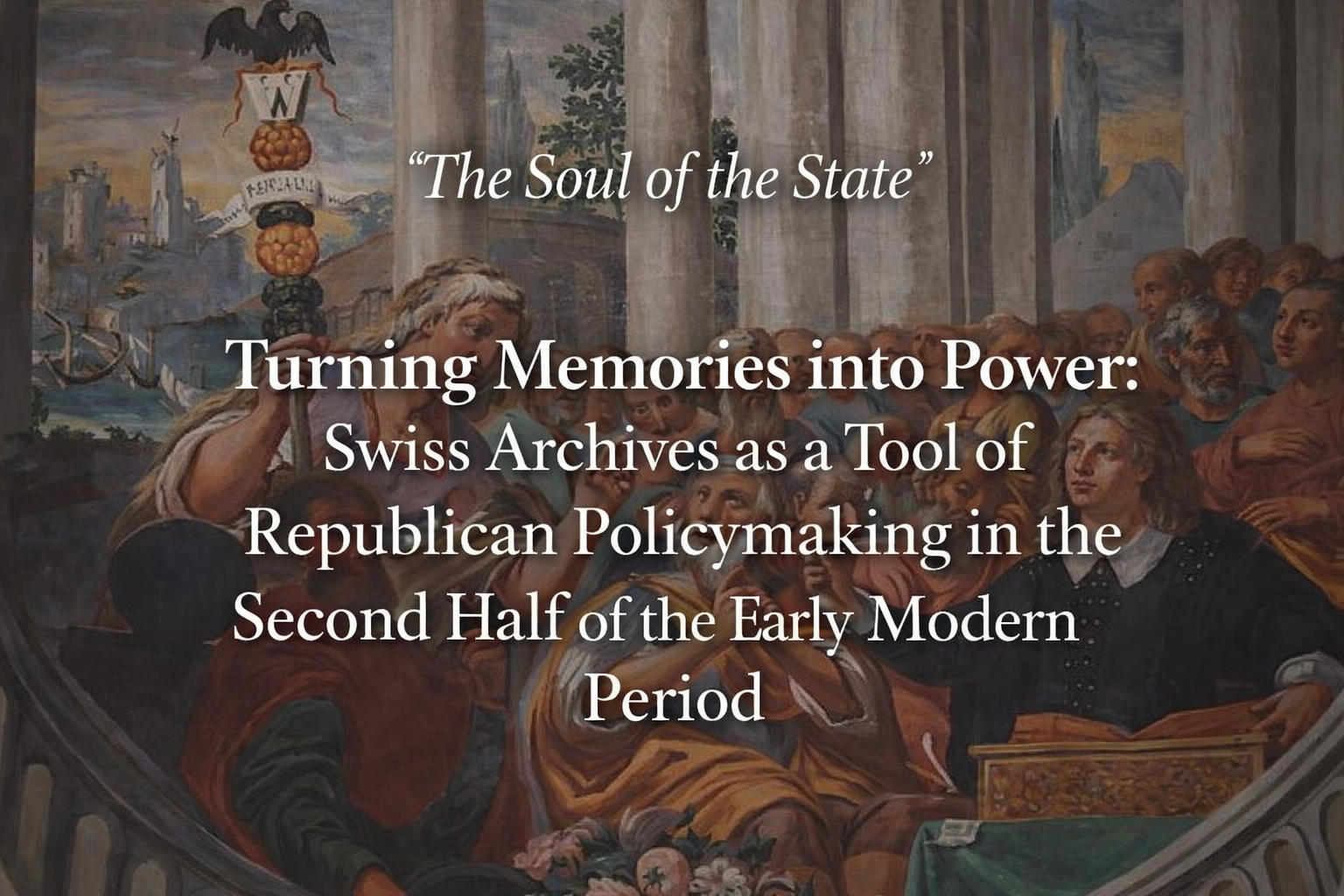
Turning Memories into Power: Swiss Archives as a Tool of Republican Policymaking
By Jan Haugner, Relevant Tomorrow (No. 27–28)
A new study by Jan Haugner examines the political use of archives in early modern Switzerland (c. 1650–1798). Archives were integral to republican governance, described as the “Soul of the State” and used to justify decisions, establish precedents, and stabilize political order.
The content of archives was shaped by political relevance. Inclusion and exclusion of information reflected broader strategies of governance. Archives functioned as both institutions of memory and instruments representing an idealized state.
This comparative study highlights the political value of early modern archives and encourages further research beyond single-case approaches.
Read the full article here: Relevant Tomorrow No. 27–28
Image modified by ChatGPT
Further information:
Flyer Programme Silent Republics
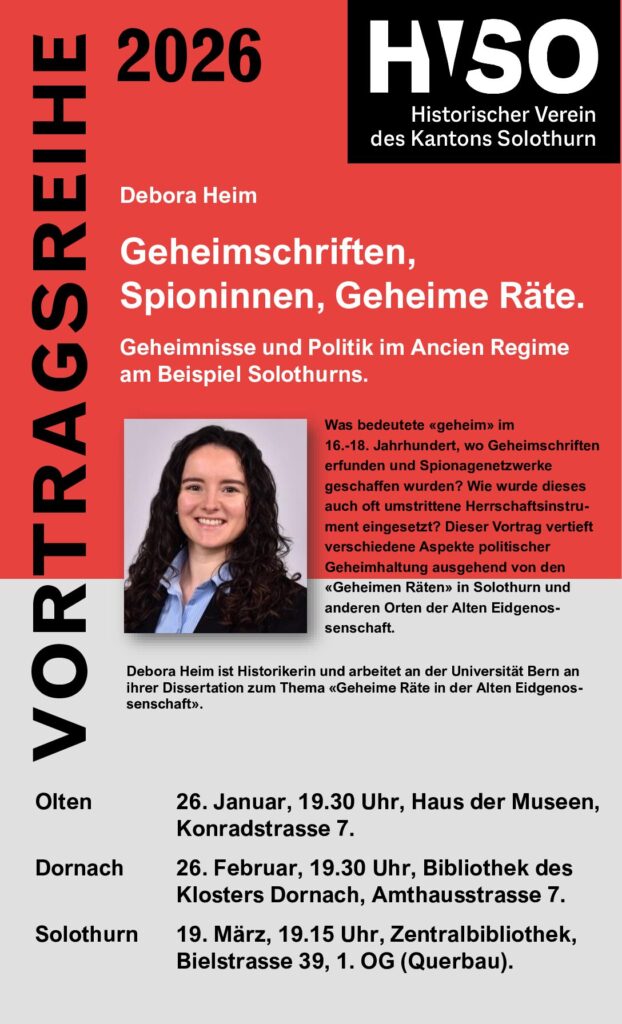
Lecture Announcement: “Ciphers, Spies, Secret Councils – Politics and Secrecy in the Ancien Régime: The Case of Solothurn”
The Historical Society of the Canton of Solothurn invites you to a fascinating lecture by historian Debora Heim, who explores how secrecy shaped political life in the 16th to 18th centuries. What did “secret” mean in the early modern period? How were ciphers invented, spy networks organized, and confidential political practices justified? And how did Solothurn’s so-called Secret Councils operate within the wider Old Swiss Confederacy?
Drawing on her research at the University of Bern, Debora Heim examines how controversial tools of secrecy influenced governance, diplomacy, and power—using Solothurn as a compelling case study.
Lecture Dates
- Olten – 26 January, 19:30, Haus der Museen, Konradstrasse 7
- Dornach – 26 February, 19:30, Library of the Klosters Dornach, Amthausstrasse 7
- Solothurn – 19 March, 19:15, Zentralbibliothek, Bielstrasse 39, 1st floor (Querbau)
By Debora Heim
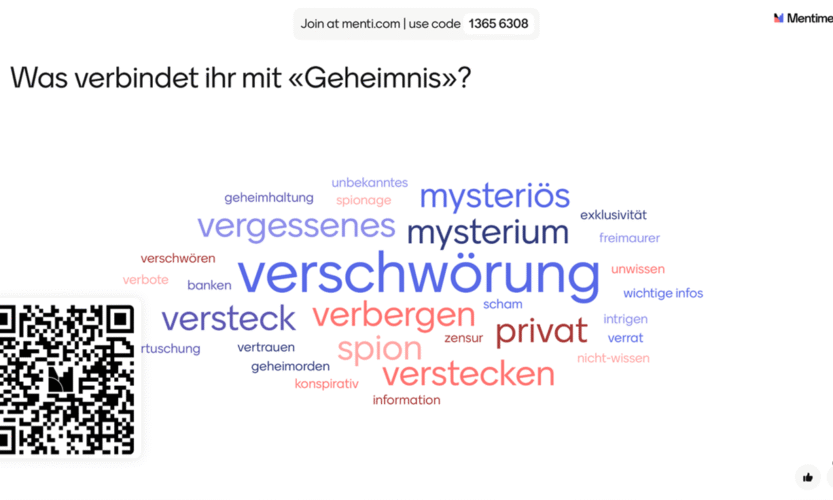
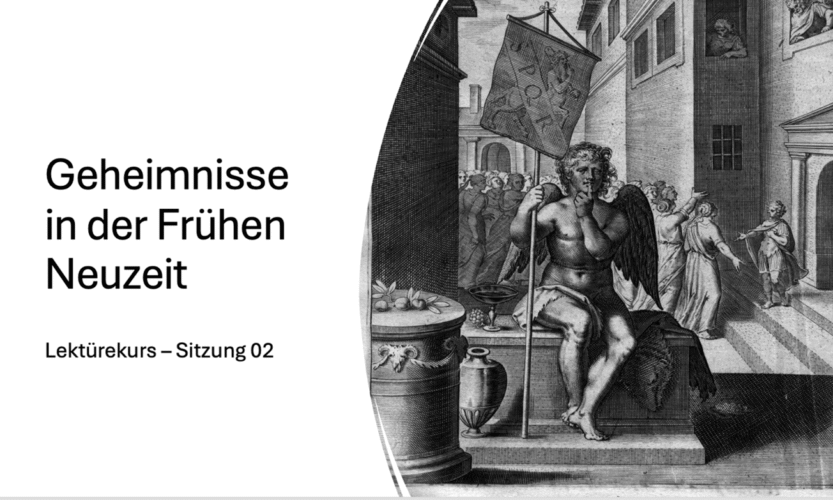
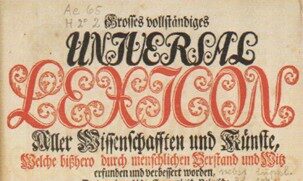
What is a secret? A hidden truth, a social practice, a technology of power — or simply something unsaid? The reading course “Secrets in the Early Modern Period” at the University of Berne sets out to explore these questions and, in doing so, reveals how profoundly secrecy shaped the world between the fifteenth and eighteenth centuries. As historian Daniel Jütte aptly called it, this was the “Zeitalter der Geheimnisse.” From alchemical laboratories to political councils, from devotional writings to coded correspondence, secrecy was not merely an exception: it was a cultural principle.
But this course is not only about the history of secrets; it is also about how we read. Every secret, after all, demands interpretation. The act of reading itself becomes an analytical tool and, in a sense, a metaphor for unveiling what lies concealed.
Part I: Tracing the Terrain of Secrecy
The first part of the course opens with an exploration of the “Zeitalter der Geheimnisse.” In early modern Europe, secrecy permeated a remarkable range of contexts — from religious ideas and philosophical reflection to political theory, medicine, and artisanal knowledge. Through selected readings, students examine political, economic, bodily, and communicative aspects of secrecy and reflect on how these domains intersected.
In this phase, we encounter the concept of the early modern «economy of secrets», with its professori de’ secreti, alchemists and cryptologists trying to gain profit from their secrets; we study the connections between the belief in divine secrets and the rise of early modern science, and we encounter early examples of industrial espionage. Central to these discussions is a conceptual question: what exactly is a secret, and how can it be defined and studied historically.
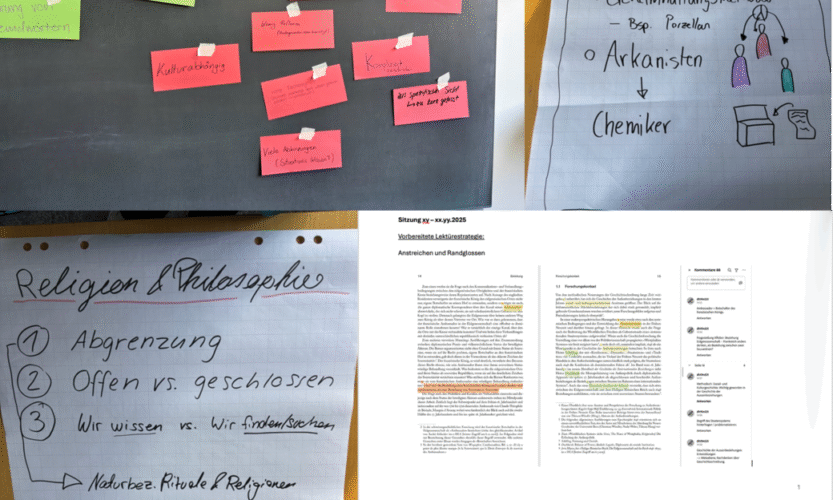
Alongside these thematic explorations, participants practice different reading strategies — annotation, structured note-taking, the PQ4R method, and visual mapping — which serve as analytical tools for grasping complex historical material. Reading, here, becomes both a scholarly technique and a metaphor for deciphering what remains hidden.
Part II: Exploring Early Modern Secrets in Detail
The second part deepens both the thematic and methodological engagement. Each week, a group of students becomes “experts,” introducing background material and leading discussions on the session’s texts. With every meeting, a new reading technique is practiced and reflected upon in a learning journal: What worked? What resisted comprehension? What remains opaque?
This cumulative process leads toward the final assignment: a short essay in which students formulate their own research question and critically engage with at least three texts from the course. The essay thus becomes a space where reading turns into writing, and where the act of interpretation itself generates new knowledge.
Making Secrets Visible
A course like this is not about delivering ready-made answers. It is about tracing patterns, interpreting silences, and learning to listen to what remains hidden between the lines. The two-part structure mirrors the dynamic of secrecy itself: first the exploration of its many faces, then the deep dive into its mechanisms and meanings.
Perhaps that is the true secret of this course — that through reading, discussing, and writing, we learn not only to reveal what was once concealed, but also to appreciate the subtle art of how knowledge keeps itself hidden.
Article written by Leo Mader
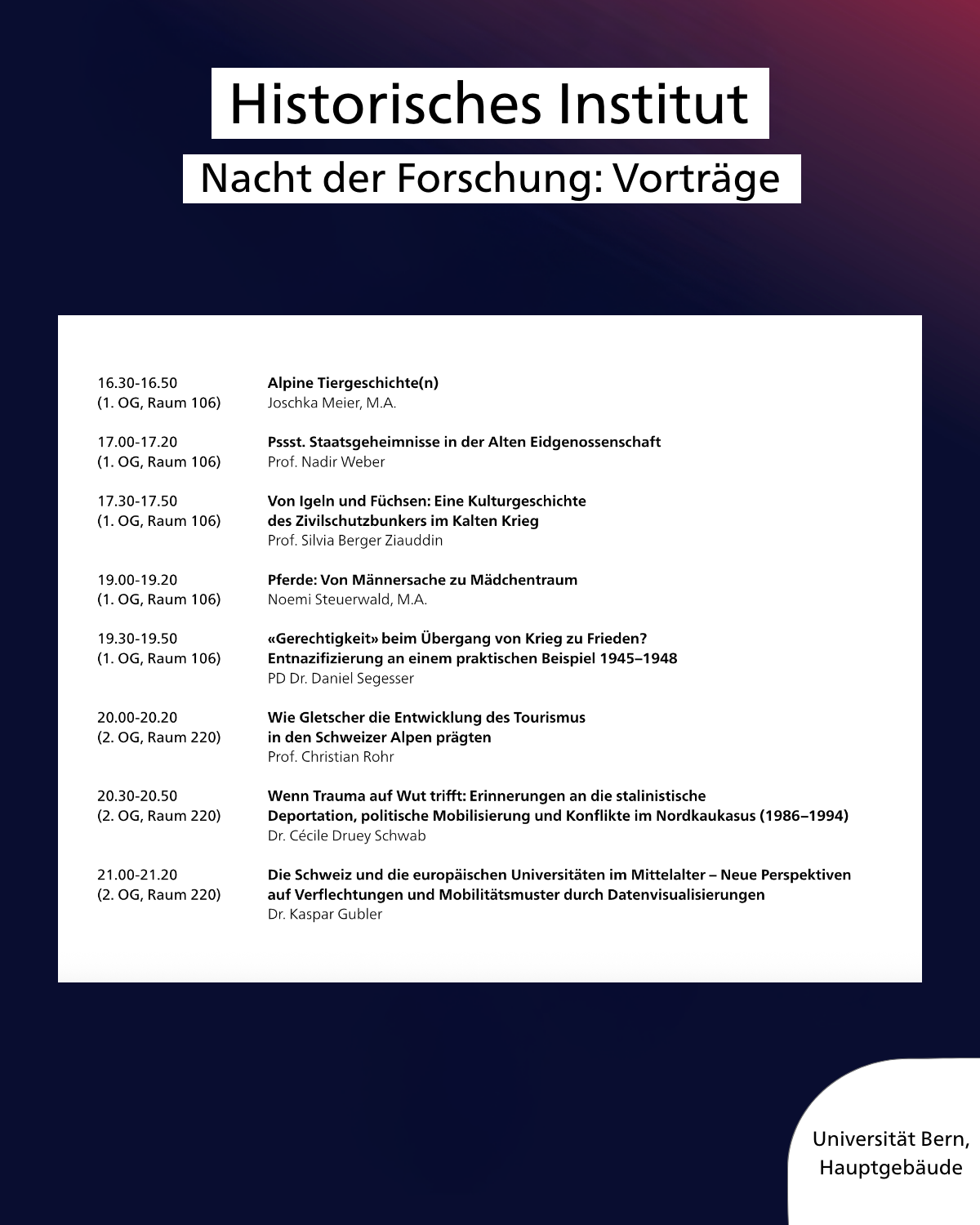
Nadir Weber took part in the “Night of Research” last summer, presenting “Pssst. State Secrets in the Old Swiss Confederacy”. The event offered insights into ongoing research and aimed to engage a broad public with historical scholarship.
Further information and insights can be found on Instagram.
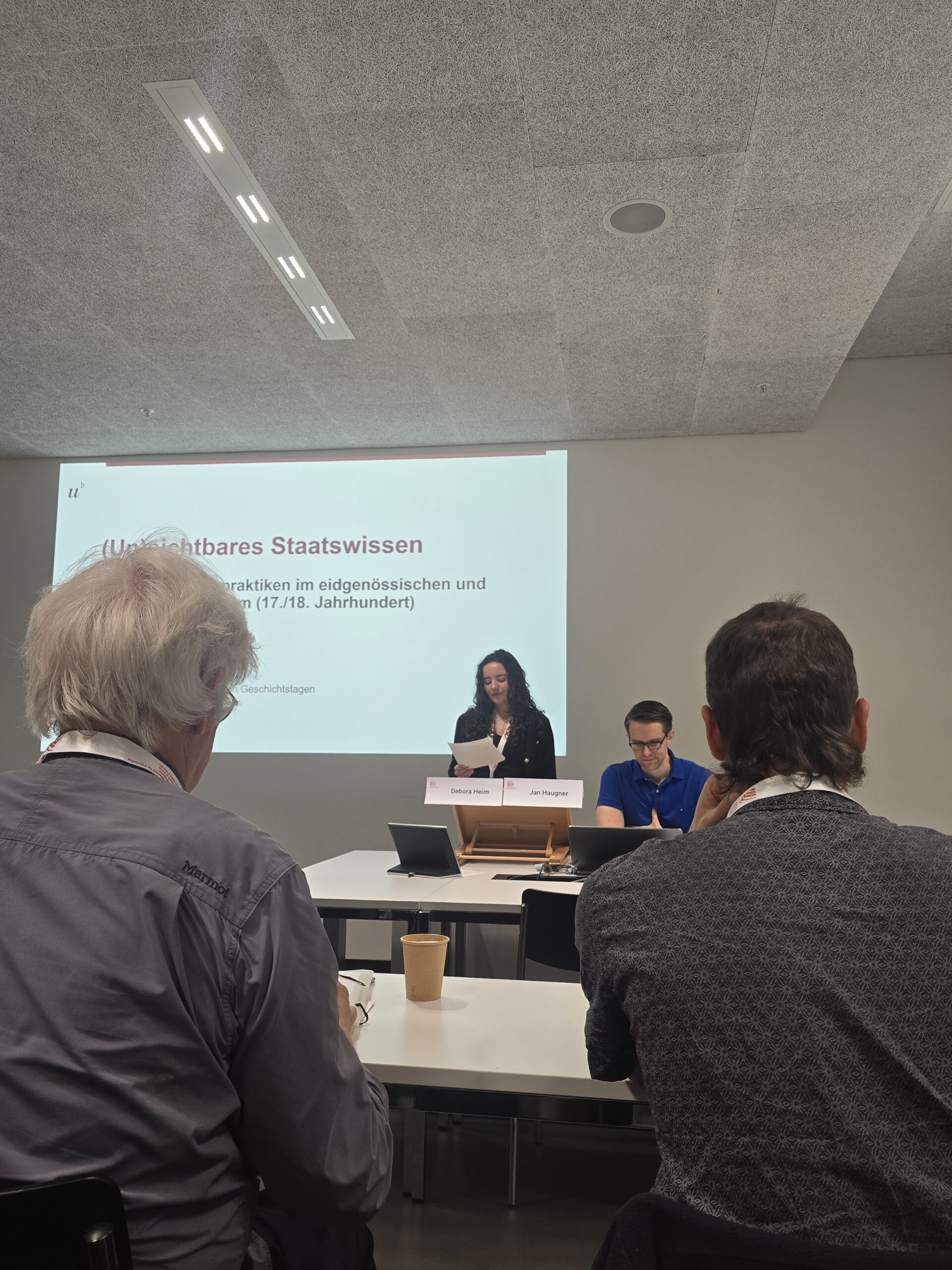
On July 10, 2025, the panel “(In)visible State Knowledge. Practices of Secrecy in the Swiss and South German Context (17th/18th Century)” took place at the Seventh Swiss History Days in Lucerne, as part of the broader conference theme “(Un)sichtbarkeit / In(visibilité)”.
The panel explored how early modern governments in republican contexts navigated access to sensitive information. While much research has focused on secrecy within monarchies, the contributions here emphasized the role of secrecy in decentralized and collectively governed territories. Archives, secret councils, and encryption strategies emerged as key tools for controlling information and shaping power.
Jan Haugner, in his talk “Accessibility and Confidentiality of State Documents in Archives of the Early Modern Swiss Confederation”, examined archival practices in the early modern Confederacy. His contribution illustrated how access and invisibility of state documents were regulated—often creating tensions within ruling authorities themselves.
Debora Heim, in her presentation “The ‘Age of Secrecy’ in the Old Swiss Confederacy. Secret Councils and Secrecy Practices in the 16th–18th Centuries“, analyzed the emergence and function of so-called “Secret Councils”. These small, powerful bodies reflected the balancing act between efficient governance and the challenges of political legitimacy in republican regimes.
A third contribution by Eveline Szarka, titled “The Secret Codebooks of the Margrave – The Case of Baden-Durlach (1677–1709)”, provided insight into encryption and clandestine communication strategies in the South German principality of Baden-Durlach.
The panel concluded with a thoughtful commentary by Andreas Würgler, who contextualized the contributions within broader historiographical debates on secrecy, communication, and state knowledge in the early modern period.

On March 7, Debora Heim and Jan Haugner presented their latest research at the Kolloquium Frühe Neuzeit, jointly organized by the University of Basel, the University of Bern, and the University of Freiburg. The event was coordinated by Prof. Nadine Amsler, Prof. Claire Gantet, Prof. Vitus Huber, Prof. Thomas Lau, Dr. Sarah Rindlisbacher Thomi, Prof. Nadir Weber, Dr. Samuel Weber, and Prof. Christian Windler.
Debora Heim’s presentation, “Geheime Eliten? Familienherrschaft und Oligarchie in Geheimen Räten der Alten Eidgenossenschaft”, examined the influence of family rule and oligarchic structures within secret councils of the Old Swiss Confederacy.
Jan Haugner’s lecture, “Zwischen obrigkeitlicher Kontrolle und individueller Verantwortung. Ein komparativer Blick auf Archive der Alten Eidgenossenschaft”, explored the tension between government oversight and personal responsibility in archival practices across different regions of the Confederacy.
Both presentations sparked engaging discussions, offering new perspectives and valuable input for their ongoing research.
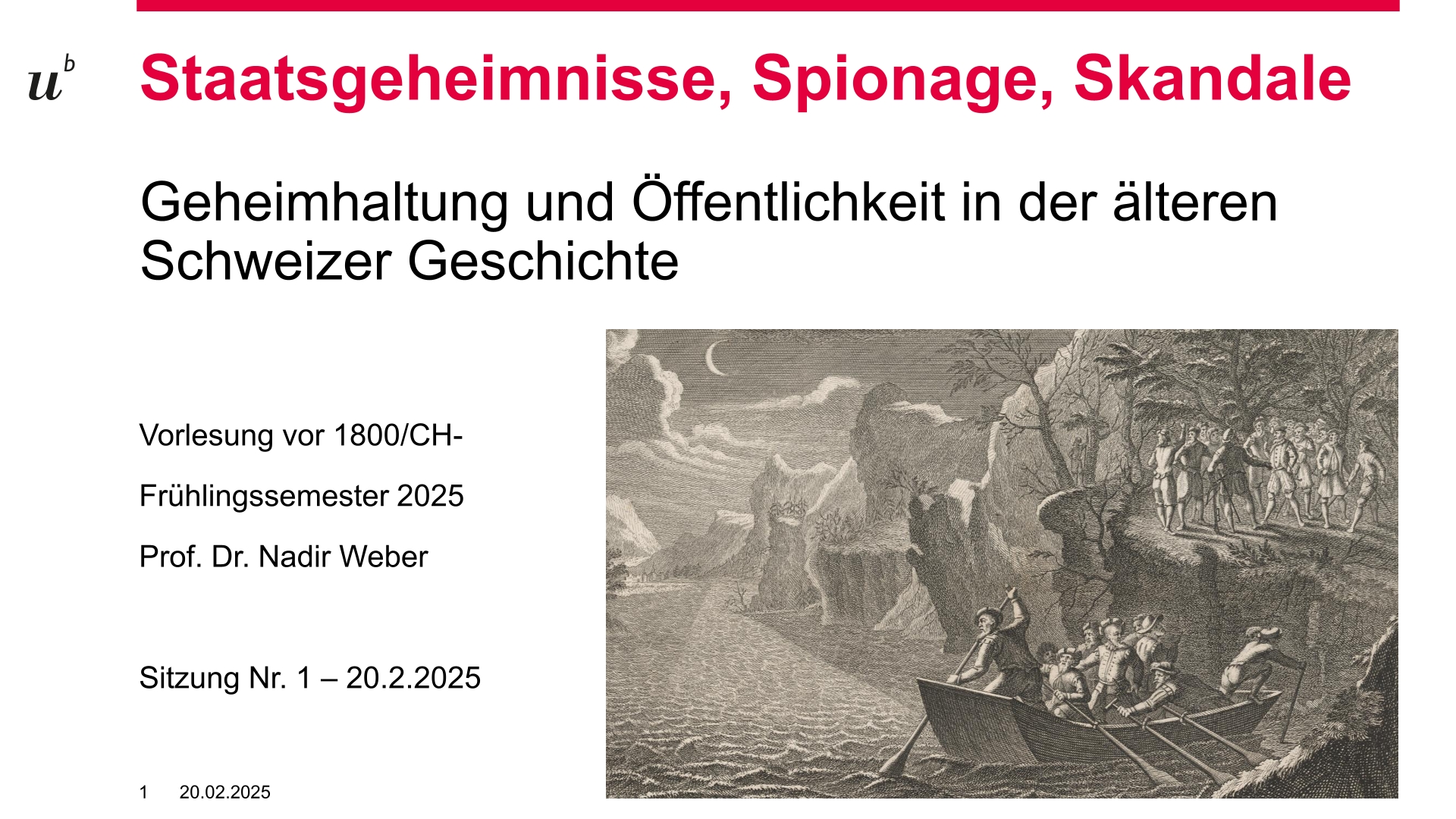
Nadir Weber teaches the lecture “State Secrets, Espionage, Scandals: Secrecy and Publicity in Early Modern Swiss History” in the spring semester 2025 at the University of Bern. The course explores the practices, functions, and representations of secrecy and disclosure in early modern Swiss contexts.

A new popular science article by Jan Haugner for the Canton of Obwalden and the State Archive OW is now available online. Titled “Alles in Ordnung? Zustand und Zugänglichkeit des obrigkeitlichen Archivs im frühneuzeitlichen Sarnen”, the article explores the state of the government archive of Obwalden in the second half of the Early Modern Period. It discusses the organization of the archive at the time and the various access restrictions imposed by the authorities.
For those interested in the history of archiving and the handling of state documents in the Early Modern Period, the article can be read here.

Recently, the article “Unbefugte im Kanzleiarchiv: Staatliche Informationskontrolle und ihre Lecks im Luzern des 18. Jahrhunderts” by Jan Haugner was published in the “Jahrbuch der Historischen Gesellschaft Luzern”. The article examines the case of Lucerne chancellery clerk Franz Joseph Felber, who repeatedly mishandled state secrets in the 1750s. His indiscretions ultimately led to his banishment by the Lucerne authorities. Unfortunately, the yearbook is only available in print and not digitally accessible.

Debora Heim and Nadir Weber, together with Christa Schneider, taught a research seminar titled «Bern 1749: Eine geheime Verschwörung als mediales Ereignis» (Bern 1749: a secret conspiracy as a media event) in the fall semester 2024 at the University of Bern. As part of the seminar, students used AI-supported transcription tools to examine handwritten documents on the conspiracy. They focused on actors, whose role had previously been little known and therefore added new perspectives and interpretations to the events of 1749.
The results of the students’ research have now been published online in the form of ten short articles. Click here to explore the website.

Debora Heim has published an article titled Aus dem Arkanum in die Öffentlichkeit. Medien- und Kommunikationspolitik des Berner Geheimen Rats in der «Henzi-Verschwörung» (1749) in the latest issue of xviii.ch – Schweizerische Zeitschrift für die Erforschung des 18. Jahrhunderts. Drawing on previously unknown sources, the article explores the role of secrecy and secret councils during a period of political unrest. By adopting a perspective rooted in communication and media history, it further examines communication and its dynamics between secrecy and publicity in mid-18th century Switzerland. Click here to get to the article.

On November 28-29, Debora Heim participated in the international workshop “Crise et communication dans la période de bouleversements 1785–1820”, organized by the centre de recherche du château de Versailles. The workshop took place in the castle of Versailles, Paris. Debora Heim held a presentation titled “Communication between secret and public spheres. Secret Councils in late 18th-century Switzerland”, where she elaborated on the role of Secret Councils at the end of the ancien régime with a special focus on secret and public forms of communication.

We are delighted to announce the publication of the workshop report. The detailed summary of the workshop “Archival Secrecy in Early Modern Monarchies and Republics”, organized by Jan Haugner and Nadir Weber and held in Bern from September 5–6, 2024, has been published on the H-Soz-Kult website. The report was authored by Nathalie Pfeuffer from Ruprecht-Karls-Universität Heidelberg and the Staatsarchiv Würzburg. Click here to read the full report.